
Table of Contents
If you spend your days navigating the high-pressure corridors of OMR, Tidel Park, or the Financial District in Chennai, you are likely familiar with a specific kind of physical toll. By 4:00 PM, your neck feels like it’s made of concrete, your lower back has a dull ache, and your hip flexors feel perpetually shortened. This is the “Corporate Stiffness Syndrome,” a byproduct of our sedentary, screen-heavy modern work life.
The answer is a definitive yes: yoga is perhaps the most effective antidote to office-related stiffness. Unlike traditional gym workouts that might add more tension to already tight muscles, yoga focuses on functional mobility, spinal decompression, and myofascial release. It addresses the root cause of stiffness—prolonged static posture—by reintroducing blood flow to “frozen” tissues and realigning the skeletal structure.
For the Chennai office worker, yoga isn’t just an exercise; it’s a biological “system reboot.” Even a 15-minute daily practice can reverse the “C-curve” slouch we adopt at our desks, significantly reducing the risk of chronic issues like cervical spondylosis or sciatica. It’s about moving from a state of physical restriction to one of fluid ease.
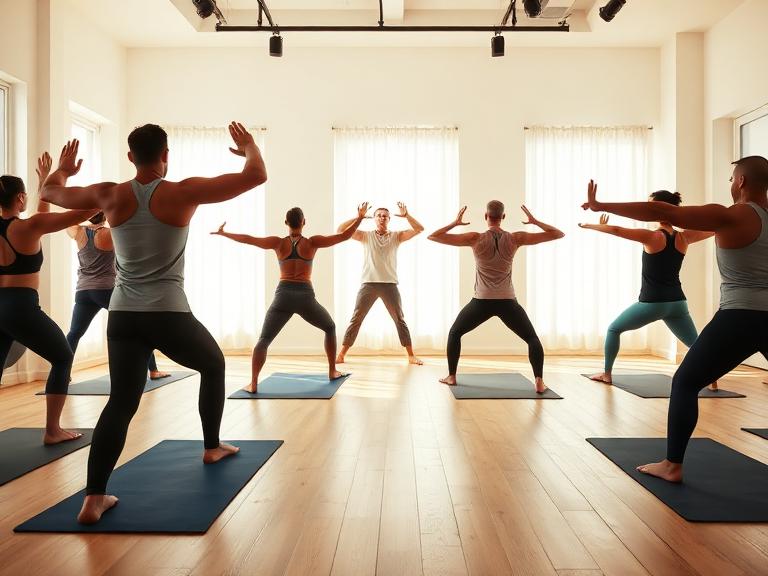
Yoga for office stiffness is a targeted physical practice that utilizes specific asanas (poses) and pranayama (breathwork) to counteract the musculoskeletal imbalances caused by prolonged sitting. It focuses on opening the chest, lengthening the spine, and releasing tension in the “Sitting Muscle Trio”: the neck, shoulders, and hip flexors.
In the bustling IT and banking hubs of Chennai, we often treat physical stiffness as a minor inconvenience—something a quick stretch or a cup of strong filter coffee can fix. However, chronic stiffness is a precursor to systemic health issues. When your muscles are tight, your circulation slows down, leading to “brain fog” and decreased productivity.
Physically, persistent stiffness leads to “Postural Kyphosis” (the dreaded tech-hunch). Mentally, the discomfort keeps your nervous system in a state of low-level “fight or flight,” increasing cortisol levels and making you more prone to burnout. In a city where the climate is humid and the commute is long, your body needs an intentional way to shed this accumulated stress. Yoga provides that release valve, ensuring that your career success doesn’t come at the cost of your physical mobility.
Yoga works on office stiffness through a three-pronged physiological approach:
Sitting causes the vertebrae to compress. Yoga poses like Bitilasana (Cat-Cow) or gentle seated twists create space between the spinal discs, allowing for better nerve conduction and flexibility.
We spend our workdays “closing” our front body—hunching over keyboards and phones. Yoga focuses on stretching the pectorals and hip flexors (the anterior chain), which naturally pulls the shoulders back and realigns the pelvis.
Stiff muscles are often “oxygen-starved.” By pairing movement with deep Ujjayi or diaphragmatic breathing, you signal the nervous system to let go of guarding reflexes. This allows the muscles to lengthen without the risk of strain.
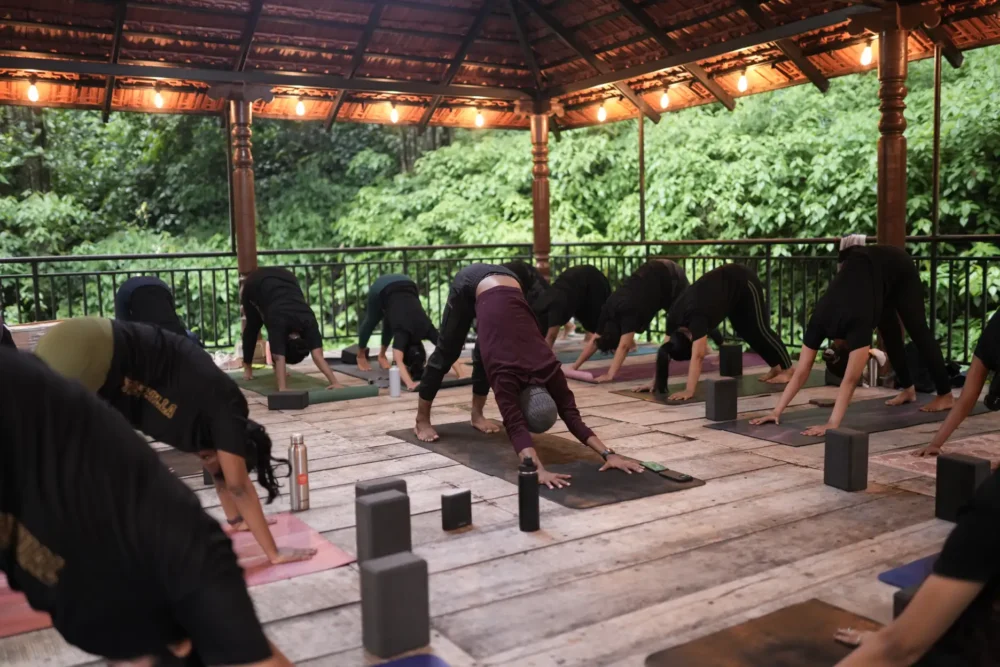
Regular practice corrects the “Forward Head Posture” common among software engineers and analysts. By strengthening the rhomboids and stretching the neck extensors, yoga keeps your head balanced over your spine, reducing tension headaches.
Office stiffness often manifests as mental rigidity. The mindfulness required in yoga breaks the cycle of repetitive thoughts. As your body opens up, your mental “aperture” widens, leading to better problem-solving and creativity.
Hips and shoulders are known in holistic wellness as “emotional junk drawers.” We store frustration and anxiety there. Releasing these areas through poses like Eka Pada Rajakapotasana (Pigeon Pose) often results in a profound sense of emotional lightness.
You don’t need to be able to touch your toes to start. Here is a practical roadmap for the “Corporate Yogi”:
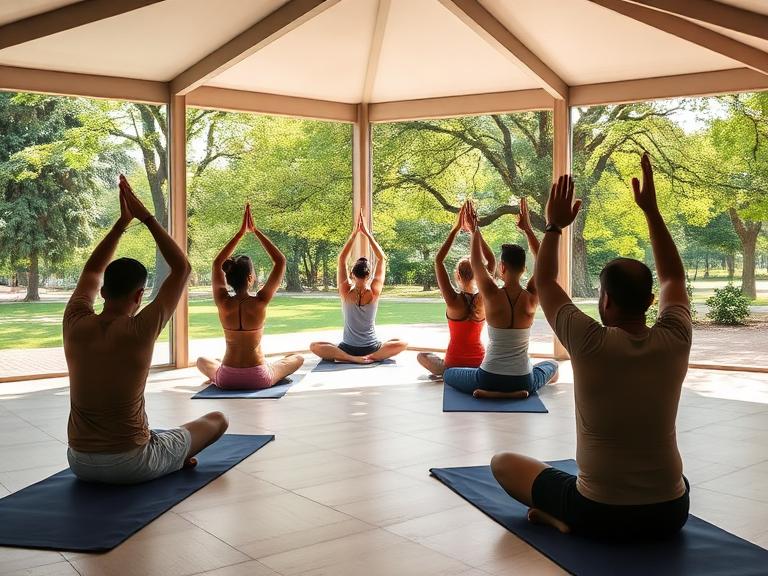
- Micro-Breaks: Every 60 minutes, do a “Seated Mountain Pose.” Sit tall, interlock your fingers, and push your palms toward the ceiling.
- The “Wall is Your Friend”: Use a nearby office wall for a “Half-Dog.” Place your hands on the wall at hip height and walk back until your body forms an L-shape. It’s the ultimate shoulder opener.
- Online Yoga Classes in Chennai: Many professionals prefer joining virtual sessions at 7:00 AM or 7:00 PM. This provides a professional guide to ensure your alignment is correct while you are in the comfort of your home in Adyar or Velachery.
- Focus on Consistency over Duration: Five minutes of stretching every day is significantly better for stiffness than a 90-minute class once a week.
This is like saying you are too dirty to take a bath. Stiffness is the reason to do yoga, not a barrier. Beginners should look for “Hatha” or “Restorative” styles rather than high-intensity Vinyasa.
Office workers often think they need a full hour and a change of clothes. “Chair Yoga” can be done in a formal shirt and trousers right at your workstation without breaking a sweat, yet it provides immediate relief.
Stretching is passive; yoga is active. Yoga involves “reciprocal inhibition”—where you contract one muscle to allow the opposing one to relax. This is much more effective for chronic stiffness than simple reaching-and-holding.
- Hydrate for Suppleness: Chennai’s heat causes subtle dehydration, which makes fascia (connective tissue) “sticky” and stiff. Drink plenty of water to keep your muscles hydrated and responsive to yoga.
- The “Commute Stretch”: If you travel by car or bus, use the headrest to gently press your head back, engaging your neck muscles to counter the forward slouch.
- Footwear Awareness: Many office workers in Chennai wear formal shoes that restrict the toes. When you get home, spend 5 minutes in Virasana (Hero Pose) with toes tucked to stretch the plantar fascia.
Scenario 1: The IT Consultant in Sholinganallur Rohan, a 34-year-old developer, suffered from persistent “Mouse Shoulder”—a sharp pain in his right trapezius. He began a 10-minute “Desk Yoga” routine involving Eagle Arms (Garudasana) and seated twists. Within two weeks, his reliance on pain patches dropped to zero, and his typing speed actually improved because his hands felt less fatigued.
Scenario 2: The Bank Manager in George Town Saraswathi, 52, dealt with lower back stiffness that made it hard to stand up after long meetings. She joined an online yoga class in Chennai that focused on hip mobility and hamstring lengthening. By practicing virtually three mornings a week, she regained the ability to walk the long corridors of her office without discomfort.
1. How long does it take for yoga to reduce office stiffness? Most people feel immediate relief after a single 10-minute session. For long-term structural changes, a consistent practice of 3–4 weeks is usually required.
2. Can I do yoga at my desk without people looking at me weirdly? Absolutely. Many “Office Yoga” moves are subtle, like neck rolls, seated spinal extensions, and ankle circles, which can be done during a conference call.
3. What is the best time for office workers to practice? Early morning is best to “pre-set” your posture. However, a “mid-day reset” around 3:00 PM is highly effective for breaking the afternoon slump.
4. Are online yoga classes in Chennai effective for beginners? Yes. In 2026, virtual instruction is highly interactive. Teachers can see your desk setup and suggest specific modifications to your workspace.
5. Does yoga help with “Carpal Tunnel” from typing? Yes. Yoga includes wrist extensions and forearm stretches that relieve pressure on the median nerve, which is crucial for those in data-heavy roles.
6. Do I need special equipment at the office? No. Your office chair (preferably without wheels during poses) and a stable desk are excellent “props” for yoga.
7. Is “Power Yoga” good for stiffness? For beginners, Power Yoga might be too intense and could lead to more tightness. Start with “Gentle” or “Hatha” yoga to melt the stiffness first.
8. Can yoga help with the stress of a long Chennai commute? Yes, Pranayama (breathing techniques) can be practiced even while sitting in traffic, helping to lower heart rate and relax the jaw and shoulders.
Your career demands a high level of mental agility; don’t let a stiff body hold you back. By integrating simple yoga movements into your workday, you are choosing to prioritize your longevity and well-being.
Remember, the goal of yoga for the office worker isn’t to become a contortionist—it’s to become comfortable in your own skin again. As you move from the rigid “on-screen” world back into your physical body, you’ll find that your life in Chennai becomes a little more vibrant, a little more spacious, and a lot less painful.
Ready to melt away the workday tension? [Join Our ‘Yoga for Professionals’ Online Batch – Start Your 3-Day Free Trial Today!]
